

five wellness red flags
because seed oils won't kill you, 10 different supplements aren't necessary, and you should be strength training

i am someone who has been interested in, and passionate about, wellness for a long time (long before i plucked up the courage to post on here!). i’m talking books, podcasts, instagram accounts, blogs, tiktok (when i used it). i was, and still am, consuming this content every. single. day!
i feel like i have really seen it all.
my approach is science-backed. i want to see peer reviewed studies in reputable journals. i prefer to get my advice from doctors (i appreciate the irony here as i am not a doctor; but my aim is to share the knowledge i have obtained and anecdotal experiences!) or those with relevant health/nutrition experience or qualifications. i do not want to hear from an influencer, with an affiliate link, that i need to take 10 different supplements to “optimise my health”. whatever that even means.
anyone else who consumes wellness content will know that the information out there varies in quality. claims being backed by science is not necessarily the norm. there is a lot of influencer marketing, unnecessary fearmongering, misinterpretation/misunderstanding of scientific studies, and, at its very worst, information not backed by any science (and often contradicted by it).
in an attempt to help you wade through the myriad of wellness content we are all bombarded with online, i have set out five wellness red flags to watch out for when perusing wellness content.
before i dive it, it is worth saying that i am not targeting anyone specific; i genuinely do not have one influencer/voice in mind as i write this. i am also not intending to command anyone to live their life in a certain way, or to unfollow anyone who creates content which encompasses my red flags. i am merely trying to achieve my aim of helping every reader live a little bit better every day, in the easiest way possible. my view is simple: if you encounter the below being promoted by someone online, tread carefully. that doesn’t mean you can’t engage with their content (some influencers i really like promote green powders; i just ignore it). i think it is important we consume wellness content intentionally, mindfully, and with a critical eye. my writing is not excluded from that!
if you see yourself represented in the below, please don’t be angry. your content is not for everyone; nobody’s content is. i am constantly reminded of the “what if i don’t like beans” comment on a dense bean salad recipe.
endless supplements
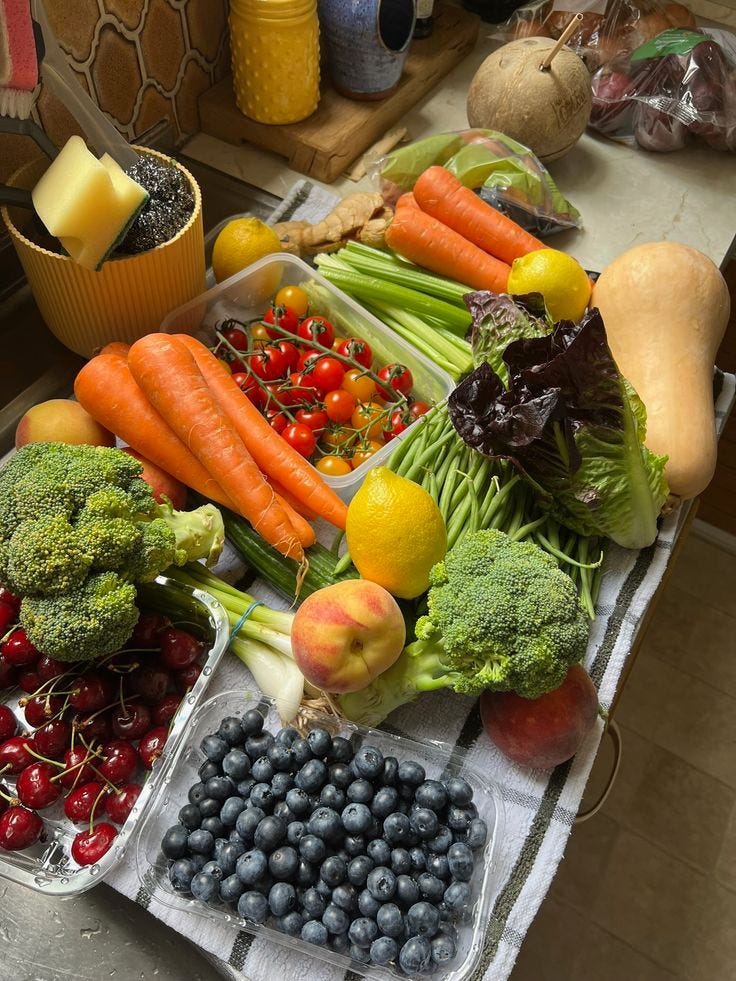
as a starting point, the best way to get your required vitamins and minerals is from eating a balanced diet where you consciously prioritise plant variety (preferably hitting 30 plants per week). it’s that simple. i won’t pretend this is cheap (and food insecurity and unavailability is a huge issue) but, as most supplements work out to be a waste of money, at least you get bang for your buck when you spend your money on whole foods. our bodies absorb nutrients much more effectively from food than vitamins.
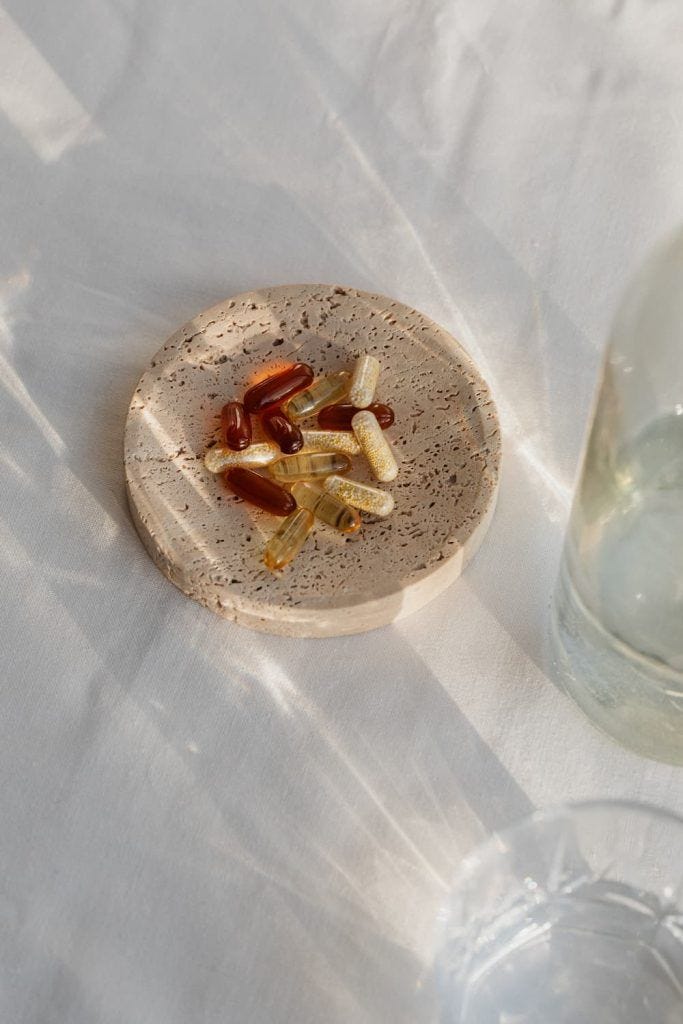
from what i have read and learnt (particularly from the useful discussions ella and rhiannon have on the wellness scoop podcast; a firm favourite of mine) the average person simply needs:
definitely vitamin d during winter if you live in the northern hemisphere (and potentially year round if you are at risk of a deficiency). the nhs recommended dose is 10 micrograms per day. there are no great food sources of vitamin d and our body cannot naturally produce it. vitamin d is important in preventing SAD (seasonal affective disorder) and it helps to regulate calcium and phosphate in the body (keeping bones, teeth, and muscles in good working order). i shared my favourite vitamin d supplement in my 2025 wellness wrapped.
potentially omega 3 if you do not regularly eat oily fish (the nhs recommends two portions per week) or get any other sources (nuts, seeds, some oils, and soya products) in your diet. ALA (a type of omega 3 fatty acid) is an essential amino acid, meaning that our body cannot produce it and we must get it from food. ALA is found in nuts, seeds, and some oils. ALA can be converted in our body to EPA and DHA, other types of omega 3 fatty acids (and both of which are found in oily fish), but only in small amounts. these fats are important for our heart, brain, lungs, immune system, and proper hormone function.
however, i will caveat this by saying that this is not recommended in the general UK population, unlike vitamin d supplementation, because of a lack of evidence that it helps to prevent heart disease. some people should not take omega 3 supplements (see here for more info from the nhs). if in doubt, ask a medical professional.
if you are going to take a supplement, avoid fish liver oil, and look for supplements containing EPA and DHA specifically. also be careful of omega 3 supplements that also contain vitamin a - you need to ensure that you are not taking more than 1.5mg of vitamin a per day.
if you are pregnant, breastfeeding, are on a plant-based diet, or are at risk of deficiency for some other reason, you may need further supplements (e.g. a multivitamin). there is some information about this online from reputable sources (e.g. supplementing with vitamin b12 if you are vegan) but it is best to talk to a medical professional to get targeted advice.
that’s it.
if you think you may have a deficiency: go to a doctor and get a blood test. do not self-diagnose or, worse, let an influencer diagnose you! even if you share symptoms with someone who has, say, an iron deficiency, it doesn’t mean that you also have that deficiency. it may be something else entirely and by self-diagnosing you may (a) cause more harm than good, and (b) delay getting the treatment you actually need. if you do have a deficiency: take the supplement prescribed to you and monitor your nutrient levels with a medical professional.
more is not more with supplements. i think it is a human tendency to think, for example, that if you need 10 micrograms of vitamin d per day, if you have 50 micrograms you will feel even better - that is not the case. in fact, overdosing on supplements can be very serious (particularly for fat soluble vitamins, like vitamin d, which can build up in your body).
while we are on the topic, i want to address green powders. i really dislike the surge in popularity that they have had, mainly fuelled by influencer marketing. more honest influencers will tell you that a green powder is just an added bonus, rather than a silver bullet, and that it cannot replace a healthy, balanced diet. that latter part is true: it cannot replace a balanced diet. but what bonus are you getting? there appear to be no proven benefits to taking a green powder, if you are otherwise healthy and have no nutrient deficiencies. as above, you risk overdosing on certain vitamins if you take one of these powders on top of other supplements, and alongside eating a balanced diet (which is what i see in a lot of wellness influencers). if you take a green powder and feel better, i’m happy for you. but do not underestimate the power of the placebo effect. you might find that making yourself a smoothie or juice has the same effect (as well as containing whole foods which have proven benefits for your health!).
extreme diets: animal products only
i’m talking mainly about the carnivore diet (and variations of the same) which saw a huge boom in 2025. other diets that are often promoted can also feel extreme, like the atkins diet or the ketogenic diet; i certainly couldn’t, and wouldn’t want to, adhere to this way of eating. however, as they offer some genuine benefit to certain populations (e.g. if you are epileptic), and can (generally speaking) be implemented in a more balanced way. perhaps a discussion on these diets is one for another day, but i would not include either of them as an automatic ‘red flag’.
not only are these carnivore diets incredibly mentally damaging (fuelling disordered eating; requiring people to miss out on important events; being generally difficult to adhere to), there is limited evidence, if any, that going entirely animal-based is good for you. in fact, we know that fibre lowers your risk of bowel cancer and that saturated fat can also increase your risk of heart disease. carnivore diets are necessarily low in fibre and higher in saturated fat, meaning that they could have devastating health consequences (or, at best, hinder your ability to lower your risk of certain diseases).
switching to a carnivore diet will also have a significant impact on your gut microbiome. the type of gut bacteria that such a diet promotes is linked with inflammation.
your favourite influencer telling you that they have never felt better since living entirely on a diet of steak and butter does not mean that the diet has any scientific support. anecdotal evidence, particularly where unsupported by any actual knowledge of the health of that person (beyond what they share online), is not sufficient. n = 1 experiments can be useful, but we cannot generalise them to the population as a whole (or even sub-groups of the population). even if someone on a carnivore diet was biologically very healthy (which i doubt, based on the science), it does not mean that you would also be healthy if you adhered to the same diet. to some degree you need to be in tune with what your body wants, alongside paying attention to the scientific literature that is increasingly available to us.
in my view, the science supports eating 30 plants a week (or as close as we can get), limiting our intake of ultra-processed foods, focusing on proper hydration, and reducing our alcohol and red meat intake (particularly processed red meat). that is not a sexy message. it does not drive clicks or engagement. the carnivore diet absolutely does. i will say nothing else and allow you to draw your own conclusions on why some influencers may choose to promote this lifestyle.
seed oil fear mongering
there is no scientific evidence that i am aware of to support the anti-seed oil movement. none. seed oils are not inherently bad for you. in fact, studies have found a range of benefits associated with the omega 6 found in seed oils (see more below).
i think a lot of this fear around seed oils has come from the use of seed oils in ultra-processed foods. but this is because seed oils are much cheaper than olive oil or avocado oil, for example. it also goes without saying that you shouldn’t have an excess of seed oils; just like an excess of anything can be bad for you. the answer is to eat fewer ultra-processed foods (particularly given everything else we know about the impact that UPFs have on our health more generally). it is not bad to use a toasted sesame oil when you make a vegetable-packed stir fry.
seed oils are full of omega 6, a polyunsaturated fat. omega 6 is not bad for you, but lots of us probably have too much (and too little omega 3, see above). it is important to get a balance between these two fats. although omega 3 may be better at protecting our heart and have better anti-inflammatory effects, that doesn’t mean that omega 6 is bad (see here)!
anyone who is spreading misinformation about seed oils plainly doesn’t understand (or doesn’t care to understand) the science; neither of which reflects well on a person claiming to give health and wellness advice. engage critically with the influencers you follow.
denying the importance of strength/resistance training
in 2025 some influencers were still pushing the narrative that strength training was not for women. particularly based on the idea that it would make you “bulky”. no doubt this will continue in 2026. i already addressed this in part in my letter to skinnytok.
let’s unpack this.
first, while we are all allowed to have individual aesthetic goals, and i won’t pretend to be above caring about how i look, what is wrong with being bulky? there seems to be this ongoing narrative that having visible muscle is not feminine or womanly. the logic of such an argument plainly does not hold up to any scrutiny.
most importantly, you will not accidentally become bulky. do you know how much effort goes into building large muscles? a huge amount. lifting heavy alone is not enough. you have to eat huge volumes of food. all while working out for years. this is particularly so for women, given our much lower levels of testosterone and higher body fat percentage. bulking up takes work.
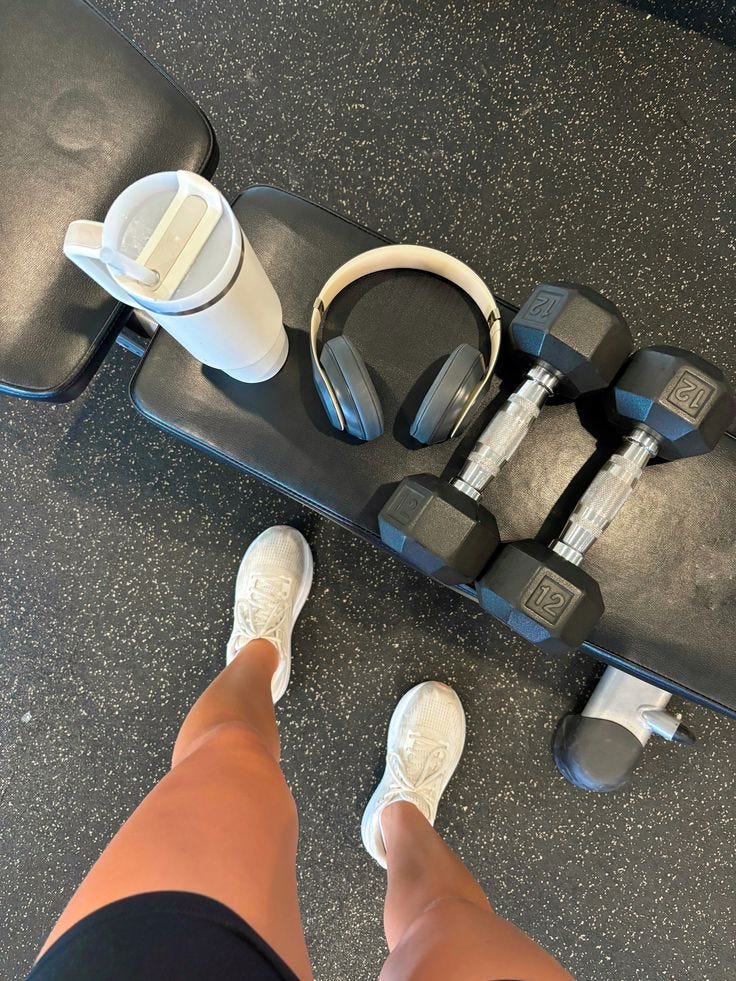
the benefits of strength training are (seemingly) endless.
studies have shown that women who strength train live longer and have a lower risk of death from heart disease.
cognitive improvements have been shown in older populations.
it will help to combat age-related muscle loss.
you can do more with your life!
it is important to do exercise that you enjoy. if you love running, keep running. but i will not lie to you about the importance of incorporating some form of resistance training into your workout regime. i promise that the gym is not scary and that the gym bros will not bite. most of them are (a) focusing on themselves but (b) genuinely kind and helpful people. being in the gym is all about confidence; build a routine that works for you.
promoting thinness above all else
this i address at length in my previous post, so i won’t repeat myself here. it is well worth in a read (in my, definitely biased, opinion).
it suffices to say here that an influencer who just promotes being thin is not concerned about the health of their followers. the science shows us that health is not solely determined by weight (with some extreme exceptions perhaps proving the rule). the goal should never be thinness: both for mental sanity and physical health. it should be health: eat well, move your body, and take care of your mind. you may lose weight in pursuit of a healthier lifestyle, and weight loss may be recommended for some individuals, but do not make that the only goal. health is multifaceted.
i expect this list to be controversial, and i always welcome healthy debate. health and wellness is not my day job, so i cannot pretend to be up-to-date on all emerging research. all i ask is that debates are kept respectful and, above all else, i will not allow my substack to be a place for misinformation or disinformation.
Thank you for all this! I have gone down the rabbit hole of carnivore diet, supplements, and seed oils! I think it’s so important to also intuitively feel what’s right for you. Listening to your body and how you feel after you consume certain food and supplements is so key. There is so much contradicting info out there I appreciate your insights on this all.
Such an important piece of writing!! Thank you for putting it out into the Substack universe 🫶🏻
I LOVE that you mentioned health is multifaceted. Personally speaking, it’s easy to forget that health is so much more than just losing weight. Being healthy looks different on each individual and sometimes we all need a friendly reminder ✨